What is social proof? (Definition and key principles)
Social proof is a powerful psychological principle first defined by Robert Cialdini in 1984 – people look to others to decide how to think, feel, or act. In his book Influence: Science and Practice, Cialdini states:
“In general, when we are unsure of ourselves, when the situation is unclear or ambiguous, when uncertainty reigns, we are most likely to look to and accept the actions of others as correct.” – Dr Robert Cialdini
In digital commerce, this behaviour translates directly into purchase intent. Recent research by Gartner shows that 90% of buyers said that some type of social proof – be it recommendations from experts, product reviews, comparison sites, or customer testimonials – influenced their critical research stage. Additionally, in a 2025 research study, 62% of consumers said that FOMO (Fear of Missing Out) directly influences their online buying behavior. The study also indicated that 6 in 10 online shoppers have made purchases due to FOMO messages or influencer posts promoting exclusivity.
This instinct, known as herd behaviour, helps consumers make faster, lower-risk decisions. Taggstar brings this behaviour online – turning social proof into a scalable driver of trust, urgency, and conversion.
In this glossary, we explore how social proof works, why it influences buying decisions, and how businesses can apply it to improve conversion and trust. You’ll also find guidance on when and how to use social proof on your website, examples from real-world applications, and practical advice on measuring its impact.
Quick guide to what’s covered:
- Why is social proof so powerful?
- How can social proof be utilised by businesses?
- Why is social proof important?
- How do I measure social proof?
- Tools to track social proof
- Pros of measuring social proof
- Why does social proof work? (Expert insight)
- Effective examples of social proof
- How and when to use social proof on your site
- Why choose social proof with Taggstar?
- Frequently asked questions (FAQs)
Why is social proof so powerful?
Social proof is powerful because it taps into our innate desire to belong and conform to the behaviours of others. This effect is rooted in cognitive biases such as the bandwagon effect, herd mentality, and social validation, which drive people to trust the choices of the majority, especially in situations of uncertainty.
This phenomenon is particularly powerful in uncertain situations where we may lack confidence in our own judgment. Additionally, social proof can manifest in various forms, such as testimonials, reviews, or even the simple act of observing a crowd. The more people we see engaging in a behaviour, the more likely we are to follow suit, as it suggests that the majority has made a well-informed decision.
In marketing, this means that social proof builds credibility, trust, and reassurance, making it a key driver behind conversions, brand loyalty, and overall consumer confidence.
How can Social Proof be utilised by businesses?
For businesses, particularly in eCommerce, brands and retailers can utilise Social Proof to build trust with potential buyers and increase their credibility by showcasing real positive experiences and feedback from customers or influencers which, in turn, will encourage customers to convert.
Common types of social proof in marketing and eCommerce include:
- Customer reviews and star ratings
Real-time ratings, written reviews, and product feedback from verified buyers reassure new customers and reduce hesitation at the point of purchase. - Case studies and testimonials
Success stories and direct quotes from happy customers provide detailed evidence of outcomes, particularly helpful in B2B and high-consideration purchases. - Social media mentions, likes, and shares
Organic engagement and community signals (e.g. “5,000 people follow this brand”) help reinforce brand popularity and relevance. - Influencer and celebrity endorsements
Public support from trusted figures — whether niche influencers or mainstream celebrities — can create credibility fast and widen audience reach. - Trust badges and certification logos
Symbols like “Secure Checkout”, “Google Verified Reviews”, or payment provider icons help reassure customers your site is credible and safe. - Friend referrals and peer approval
Seeing friends, colleagues, or peers endorse or use a product taps into FOMO and herd behaviour, especially on social or messaging apps.
For a deeper understanding of how businesses can incorporate social proof into their marketing strategies, be sure to explore our social proof marketing guide.
Understanding the power of social proof is crucial for any business looking to drive higher conversion rates and engagement by influencing customer behaviour. By leveraging this psychological principle of persuasion effectively, companies can also help their customers in making informed buyer decisions, as well as enhancing brand reputation and loyalty.
Why is social proof important?
Social proof is extremely effective in marketing and eCommerce because it relies on the basic, yet powerful, psychological concept that people are more likely to take a certain action if other people are doing it. It is the same factor that motivates us to choose a crowded restaurant over an empty one. And in shopping, when we see other people buying and enjoying a product, we are more likely to think that we will enjoy the product as well.
Here’s why social proof is important:
- Decision making: social proof helps consumers make decisions – especially when dealing with multiple choices or faced with uncertainty. Consumers typically think that if many have chosen a particular option, it is likely a good choice.
- Trust and Confidence: social proof helps establish trust and instils consumer confidence that they are making the right decisions. When consumers see that others have positive experiences with a product, service or organisation, they are more likely to trust it and feel more confident in their choice.
- Validation: social proof can also validate a consumer that she has made the right choice. When we see that other people have made the same choice or taken the same action, we are reassured that we are making the right decision, reducing feelings of regret or buyer’s remorse.
- FOMO (Fear of Missing Out): the fear of missing out on something can be a strong motivator for many people. When people see that others are participating in something or buying a particular thing, they do not want to miss out.
Business Benefits of Using Social Proof
By tapping into the “wisdom of the crowd” you will build trust, drive sales, and influence consumer behaviour. When leveraging social proof in eCommerce, retailers and brands often see measurable business outcomes:
- Increases conversion rates – when shoppers see that other people are buying a product or service, they are more likely to invest in the product themselves.
- Elevates customer experiences – when leveraging real-time social proof, it leads to more dynamic and engaging customer experiences.
- Improves product discovery – highlighting social proof messages and content can help shoppers more easily find the product they are looking for.
- Reduces cart abandonment – if a shopper is unsure about completing a purchase, social proof can help reduce uncertainty and cart abandonment. Tapping into the FOMO factor – only 3 left, or 122 others have bought this – can also add a sense of urgency and encourage the shopper to complete the transaction.
How do I measure the impact of social proof?
Measuring social proof involves tracking metrics that reveal customer engagement and trust indicators. Here are the most common and meaningful ways to measure the performance of your social proof elements:
Conversion Rate Impact
Use A/B testing or split testing to compare how pages perform with vs. without social proof messages.
Look for:
- % increase in “Add to Cart” or completed purchases
- Higher engagement with featured products
- Reduction in bounce rate from product pages
Click-Through Rates (CTRs) on Social Proof Elements
Track whether users are interacting with reviews, testimonial carousels, or social proof banners.
Look for:
- How often social proof widgets are clicked
- Scroll depth on pages where proof appears
- Hover or dwell time on star ratings, badges or quotes
Engagement with UGC and Social Signals
Use social listening or tracking tools to measure how your audience is responding to and sharing social proof.
Track:
- Shares, mentions, and hashtags related to reviews or testimonials
- Comments and replies on social proof-driven posts
- Review ratings and growth over time
To deepen insights, consider A/B testing with and without social proof elements to measure its direct impact on conversions and user behaviour.
Tools to track the impact of social proof
Various tools help track and manage social proof:
- Analytics Platforms (e.g., Google Analytics) – Track customer interactions with social proof elements.
- Review Platforms (e.g., Trustpilot, Yotpo) – Gather and manage customer reviews and feedback.
- Social Media Monitoring Tools (e.g., Sprout Social) – Track mentions, shares, and social media sentiment.
- On-Site Engagement Tools (e.g., Taggstar’s own solution) – Display and measure engagement with real-time social proof on product pages to optimise conversion rates.
Pros of measuring the impact of social proof
Understanding the pros of measuring social proof can guide its strategic use:
- Improves Conversion Rates: Seeing reviews, ratings, and real-time purchase data can encourage hesitant shoppers to buy.
- Builds Trust: Social proof reinforces a brand’s credibility, especially for new customers.
- Enhances Customer Retention: Engaging current customers to leave reviews or testimonials fosters a loyal customer base.
Why does social proof work? An expert’s opinion
Social proof works because consumers are more likely to be influenced by the ‘wisdom of the crowd’ and follow the actions of other people. This concept is also known as the bandwagon effect. We trust that we are making the right decision because other people are making the same decision.
When brands and retailers are able to build that trust with consumers, it significantly impacts the bottom line. Research from Edelman found that consumers who trust a brand are more than twice as likely to be the first to buy the brand’s new products and they are more than twice as likely to advocate for a brand they trust. However, on the whole, people trust each other – family and friends, and even influencers – more than they trust brands. According to Edelman, consumers trust their own experiences and the experiences of others more than what the brands say. Which means that however artfully crafted the images and words on the retailer’s website, customers remain sceptical.
By introducing social proof from various sources into your marketing mix and eCommerce site, you build trust, credibility and authority with your customers. Shoppers will feel more inspired, informed and confident that they are making the right purchase decisions, which will in turn boost conversion rates, reduce cart abandonment and return rates, and increase revenue.
Common Pitfalls to Avoid When Using Social Proof
While social proof is highly effective, poor execution can have the opposite effect. Here are some of the worst practices to avoid:
- Fake or Unverified Testimonials: Using inauthentic reviews or endorsements can erode customer trust, potentially leading to negative publicity.
- Overwhelming with Excessive Social Proof: Crowding a page with too many social proof elements (such as multiple reviews, badges, and certifications) can create information overload, distracting users and reducing trust.
- Outdated or Irrelevant Proof: Using old or unrelated social proof signals (e.g., awards from years ago or testimonials from irrelevant products) can make a brand appear disconnected.
- Ignoring Placement and Timing: Misplacing social proof, such as showing trust badges at the start of the funnel instead of at checkout, can reduce its effectiveness. Proper timing and placement are key to maximizing social proof’s impact.
What are some effective examples of social proof?
Social proof is one of the most effective ways for retailers and brands to build trust and influence shopper behaviour. By showing how others interact with your products, you can help customers feel confident in their choices and move faster towards purchase.
Here are some of the most effective ways to apply social proof – and how leading brands are doing it with Taggstar:
- Customer ratings and reviews: Display star ratings and verified reviews directly on product pages to reassure shoppers of product quality and satisfaction.
- Testimonials and success stories: Share authentic feedback from real customers or case studies to reinforce credibility and performance.
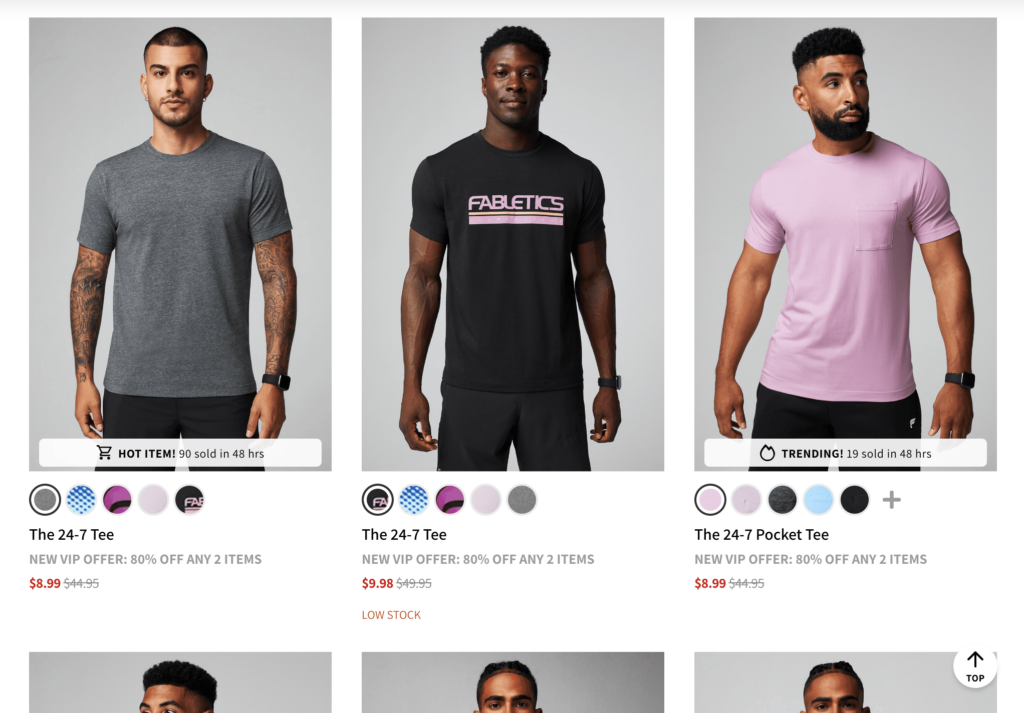
- Showcase popularity: Highlight if a product is popular with other shoppers by displaying social proof messages on product list pages, product detail pages or in the cart. For example, Fabletics used Taggstar’s real-time social proof to highlight product popularity and saw a 3.19% uplift in conversion rates.
- User-generated content (UGC): Encourage customers to share their photos and videos of products in use. Integrating these visuals on PDPs helps customers see products in real life, enhancing authenticity.
- Influencer and expert endorsements: Collaborate with trusted voices in your industry to validate your products and extend reach across new audiences.
- Real-time social proof messaging: Leverage behavioural data such as “Bought by 12 people in the last hour” or “200 people viewing now” to create urgency and confidence. Retailers like Bloomingdale’s implemented Taggstar’s messaging to drive engagement across key product categories and improve customer experience.
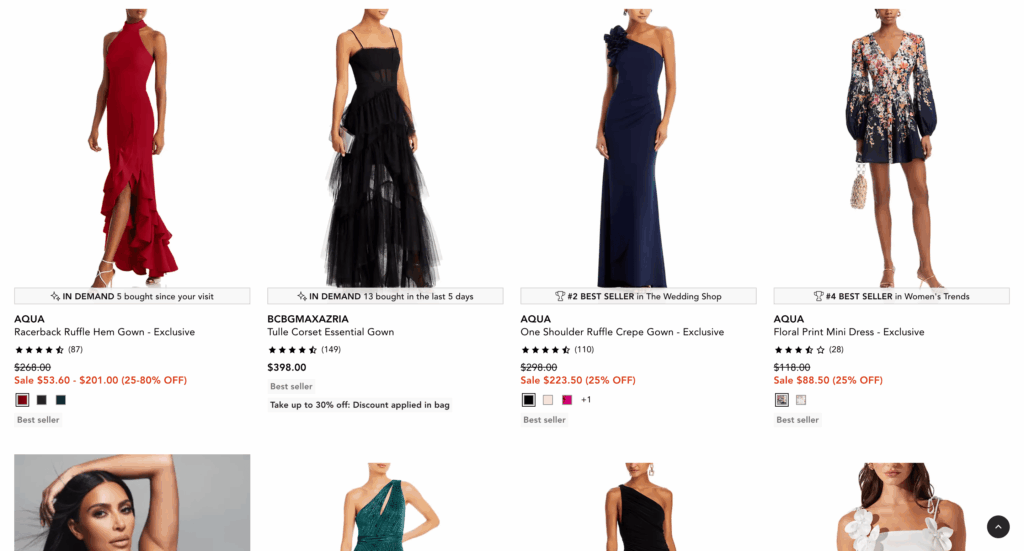
- Highlight trending and best-selling products: Debenhams used Taggstar to showcase live trending products and saw a measurable uplift in both conversion and revenue per visitor. Similarly, Steve Madden used social proof messages like “Popular choice” to reinforce shopper confidence and increase sales.
The above are just some of the examples of how companies can leverage social proof. Social proof can be used in many different ways depending on the type of products or services sold and it can also be highly effective across many industries. Most companies will use a mix of tactics and channels to fully tap into the benefits of social proof. B2B and professional services companies typically benefit more from customer testimonials whereas, social proof messaging in particular, has proven to be an extremely effective tool for retailers and brands to create more engaging and dynamic shopping experiences, boost conversion rates and increase sales. For further insights and best practices on social proof, consider exploring our videos and webinars.
By showcasing trending and best-selling products on product lists and product detail pages with real-time quantifiable data (e.g., Best-seller – bought by 12 people in the last hour), fashion, beauty and luxury companies, for example, are able to significantly increase conversion rates and reduce return rates. In categories with a high volume of categories and SKUs, like retail and home, social proof that highlights the behaviours of other shoppers in quantifiable data (e.g., number 1 product in lighting or 200 people viewing now), improves product discovery and helps shoppers make more informed and confident purchase decisions. Regardless of the application, for retailers and brands, social proof is most effective when it is authentic, trustworthy and real-time.
How and when to use social proof on your site
Timing is essential in social proof placement. Consider:
- Product Pages: Use real-time data, like “people are viewing this item now,” to discover products they’ll love.
- Checkout Pages: Feature testimonials or ratings to reassure buyers before completing a purchase and use social proof messages to boost confidence that they are making the right purchase decision.
- Landing Pages: Showcase customer success stories or case studies to establish trust immediately.
Experiment with placements, content and design to determine where social proof has the highest impact on engagement and conversion.
Why choose social proof with Taggstar?
At Taggstar, we take the psychology of social proof and help retailers and brands deliver more dynamic and engaging shopping experiences, build customer trust and increase online conversions and sales.
Powered by AI, Taggstar’s platform offers scalable real-time conversion messaging solutions including social proof messaging. The Taggstar platform anonymously aggregates shopper behaviour and surfaces customisable and relevant social proof messaging, sharing what others are buying in real-time, across the digital shopping journey. With the widest range of customisable messages showing trends, bestsellers in category, product views, inventory availability and more, Taggstar ensures the right message at the right time to optimise the customer experience, boost conversions and drive more sales.
The result? Shoppers see evidence of popularity, scarcity, and trust – right when they’re deciding whether to buy. This bridges the gap between behavioural theory and measurable commercial uplift.
Join the growing list of leading global brands & retailers that trust Taggstar to elevate their shopping experiences and drive significant sales lift. Get started today.
Discover how leading brands like Debenhams achieved over 4.5% conversion uplift with real-time social proof messaging. Read our customer story here.
Social proof FAQs
What is social proof? Social proof is the influence created by seeing others’ actions or endorsements, which builds credibility and can drive purchasing decisions.
Why is social proof so powerful? Social proof is powerful because it leverages our natural inclination to mimic the behaviour of others, particularly in uncertain situations. It fosters trust and credibility by showcasing that others have enjoyed favorable experiences.
What is social proof in marketing? Social proof in marketing is the use of customer feedback, endorsements, or behavioural data to influence potential buyers. By showing how others have interacted with a product or service—through reviews, star ratings, or popularity signals—brands create trust and credibility that encourage new customers to convert.
How is social proof used in marketing strategies? Marketers use social proof to strengthen credibility and drive conversions across channels. Examples include adding real-time purchase notifications on product pages, sharing customer success stories, featuring influencer endorsements on social media, and displaying trust badges or “bestseller” labels to build consumer confidence.
What are examples of social proof? Social proof examples include customer reviews, testimonials, case studies, industry awards, influencer endorsements, and ratings. These elements demonstrate positive experiences with a product or service, influencing potential customers’ decisions.
Why is social proof important? It builds trust, reduces hesitation, and improves conversions by providing customers with reassurance.
How can I add social proof to my site? You can integrate customer reviews, real-time purchase data, and social media mentions to enhance trust and encourage sales.
Which types of social proof work best? The most effective social proof depends on your audience but often includes customer reviews, testimonials, and real-time activity displays.

