
UK beauty sales grew +7% in 2025, slightly below global growth of +10%. But underneath that headline, a major shift is underway, driven by constrained consumers, AI-powered discovery, and a fiercely competitive online channel.
Last week, industry insiders from NielsenIQ – Claire Marty, VP, Global Beauty Vertical and Eric Mills, Senior Thought Leadership Consultant – shared data and trends impacting beauty brands in 2026 at the CEW Beauty Insights event in London.
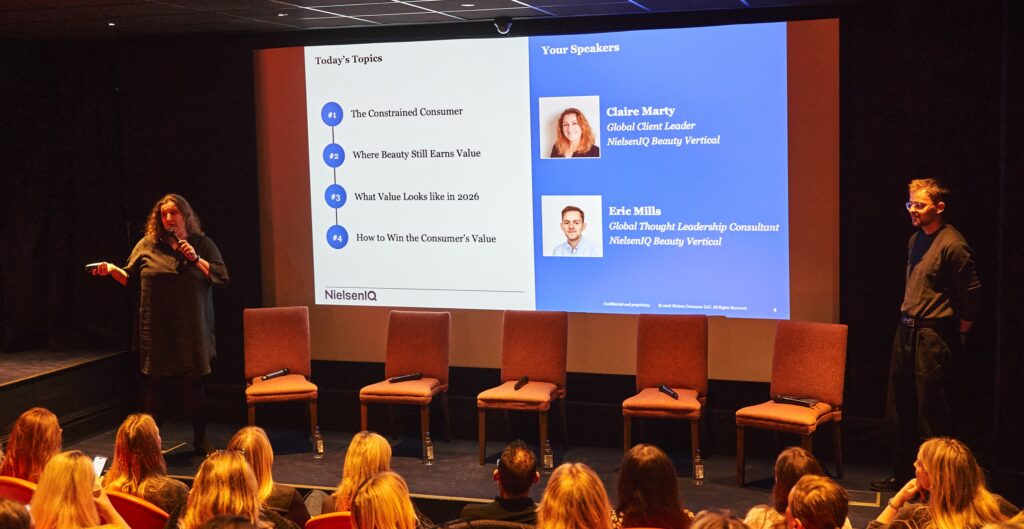
Here are some key takeaways from the panel discussion.
Consumers are constrained, but still buying beauty
According to research by NielsenIQ, only 17% of consumers say they can spend freely. Yet beauty remains a priority, because as big financial milestones feel out of reach, small indulgences fill the gap. 21% of Gen Z consumers say they’re less interested in achieving significant life milestones like investing in a home or getting married, while 17% are buying more small personal luxuries, such as trading salon visits and costly alternatives for affordable at-home products.
Skin care and at-home rituals are winning
Another interesting insight from NielsenIQ research is that 43% of consumers in the UK are spending more time at home and going out less often. And 23% say that they are more stressed than they have been before. The impact is evident in the category growth rates. Skin care leads beauty growth at +13% globally, followed by fragrance at +12%. Cosmetics, which is often tied to going-out occasions, trails in growth at +7%. Products that feel like a meaningful self-care ritual are where the growth is.
Online is winning, but the bar is rising fast
Digital channels are outpacing physical retail everywhere. In the UK, online beauty grew +9% compared to +4% offline. 60% of online beauty consumers in the UK have purchased beauty products on Amazon, and the top 8 online beauty merchants now include TikTok Shop, eBay, Vinted (secondhand), and Temu, where the average cosmetics item costs only £2.70.
Consumers are hunting for value in every corner of the internet – 9% of online beauty shoppers have purchased a second-hand item. It is evident that standing out requires more than a good product, beauty brands need the right channel mix, pricing and customer experience.
AI is rewriting the path to purchase
The most important trends to watch in 2026 include a return to skincare simplicity and the continued growth of K-beauty. AI, however, might be the biggest shift brands and retailers need to prepare for now.
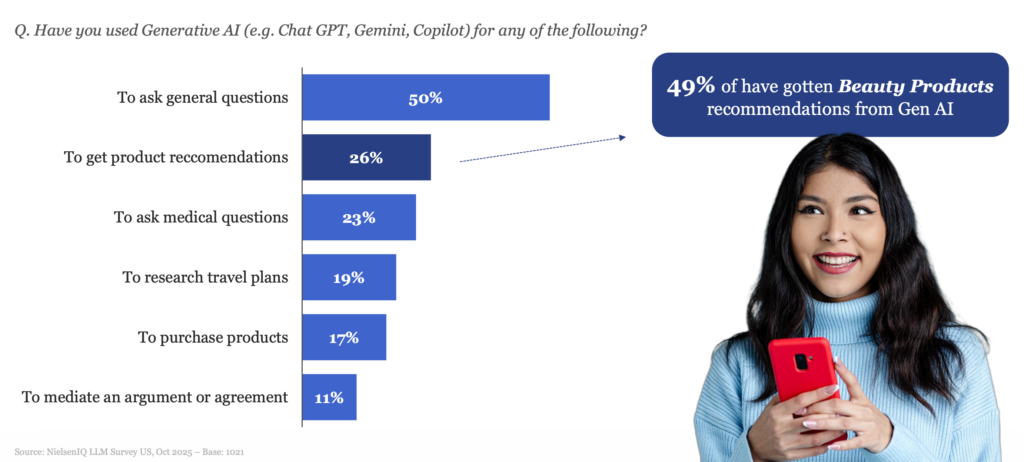
The use of GenAI is increasing daily – 26% use GenAI tools such as ChatGPT or Gemini to get product recommendations and 49% of those AI users have already received beauty product recommendations.
As AI assistants become the default search interface, the “shelf” is shrinking dramatically, going from 50+ visible SKUs in physical stores to just 1-2 recommended SKUs in an AI-controlled shelf.
In a world where AI recommends just one or two products, you’re either the answer or you’re invisible. The brands that get recommended will be those with the richest, most credible social proof, including reviews, ratings, user content, and real-time shopper behaviour. AI models synthesise this publicly available content when forming recommendations. Your social proof ecosystem is now a discoverability channel.
AI-powered conversion messaging, including social proof, attribute messaging, and dynamic badging, is equally important on your eCommerce site and across digital channels to drive conversions, increase AOV and RPV, and reduce bounce and abandonment rates.
- Social proof messages that highlight trending products and shopper behaviours supported by real-time data turns hesitant shoppers into confident buyers by showcasing what other shoppers are buying.
- Attribute messaging elevates the digital shopping experience and improves discoverability by highlighting relevant product attributes above the fold, which help shoppers find the right products for them.
- Dynamic badging automates badge management, enabling shoppers to quickly spot important product information, such as price reductions and special offers, nudging them to make a purchase decision.

Three things beauty brands and retailers can do now
- Make your value case unmissable. Beauty has pricing power, but only when multi-benefit value is clearly communicated. 52% of consumers will pay more for products that save time or simplify their routine. Use attribute messaging and dynamic badging to clearly communicate key attributes and value.
- Build your social proof infrastructure. Actively collect, display, and amplify customer reviews and social proof messaging. This is your ticket to AI-driven discovery and to turning hesitant shoppers into confident buyers on your site.
- Optimise for AI search, not just Google. Structured, rich product content and a strong social proof ecosystem are what AI models use to make recommendations. Brands that master this now will own the next wave of beauty discovery.
Learn how to brands and retailers like Justmylook.com, The Body Shop, M&S, Debenhams and Bloomingdale’s accelerate growth with AI-powered Conversion Messaging from Taggstar. Contact us to get started with social proof to win in 2026 and beyond.