
Returns have become one of the most expensive and persistent challenges in eCommerce. Return rates remain stubbornly high, and processing costs continue to rise.
According to a recent benchmark report, the return rate in the UK is 17.5% which is notably higher than in other countries. Nearly 80% of those returns end in refunds rather than exchanges.
To minimise the financial impact of returns, 42% of UK merchants currently charge return fees. At the same time, customer expectations are shifting in the opposite direction: 65% of UK shoppers expect free returns.
Free, easy returns have become a core part of the value proposition for online retail. Yet, retailers struggle to make free return programmes economically feasible.
Reinventing return policies
According to the 2025 Returns Landscape study, by NRF and UPS in the US, retailers’ top priorities for 2026 are increasing online sales and reducing return rates. Many acknowledge that the current return landscape is unsustainable. They face the challenge of balancing customer expectations and the need to grow online channels against rising operational costs associated with returns, as well as pressures from external factors such as tariffs.
These are all amplified within the UK market, where shipping costs, labour shortages, and cross-border friction with the EU continue to put pressure on margins.
It’s no surprise that nearly two-thirds (64%) of merchants report updating their returns process as a priority in the next six months.
This aligns with Forrester’s prediction that 2026 will mark the end of generous eCommerce return policies. Retailers will increasingly turn to machine learning to tier return benefits based on profitability, while tightening policies for high-cost or high-risk behaviour.
But while policy changes are inevitable, they can’t solve the problem alone. The key is to reduce returns before they occur.
Reducing returns starts with better purchase decisions
Most returns stem from uncertainty:
- Did I pick the right size?
- Will this look the way I expect?
- Is this the version others recommend?
- Does the product actually perform as promised
- Is this a popular choice?
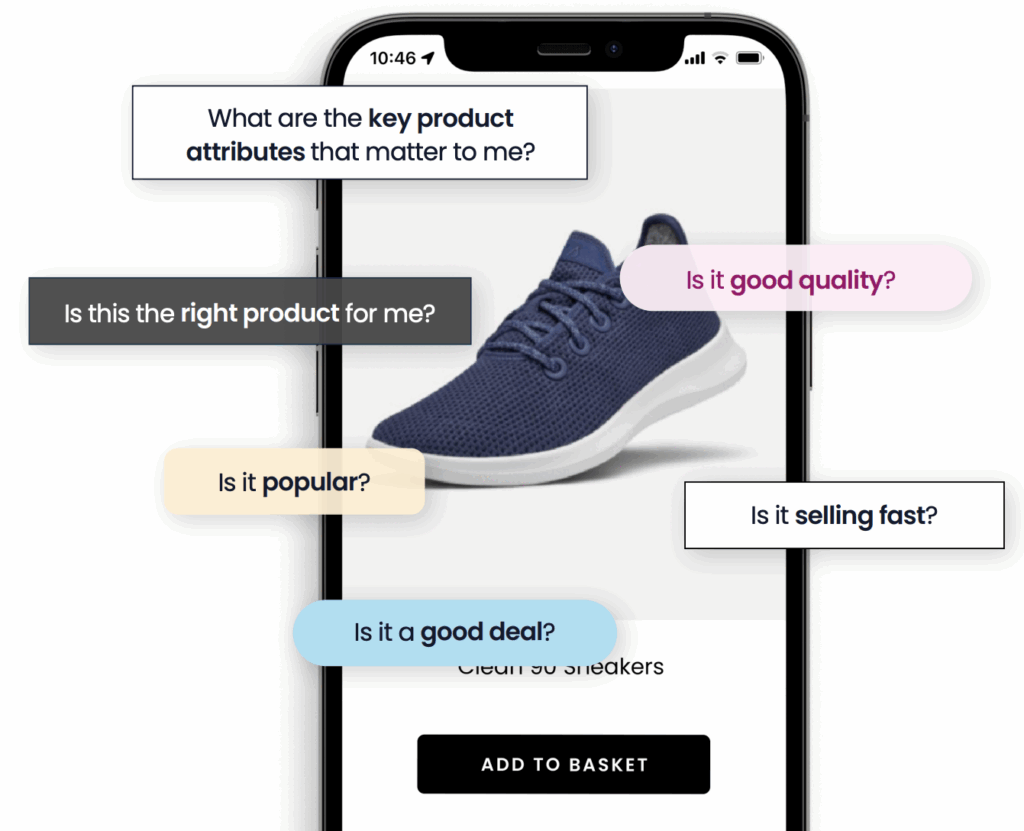
To reduce uncertainty (and reduce returns), retailers need tools to help shoppers choose the right product the first time. This is where conversion messaging, such as social proof and attribute messaging, can help.
How Social Proof helps shoppers choose with confidence and return Less
Social proof not only boosts conversion rates but also improves decision accuracy, reducing post-purchase surprises and the risk of costly returns.
1. Guide shoppers to products with a strong track record
Messages like “Top-rated by customers like you” or “Most purchased in the last 30 days” help guide buyers toward reliable, lower-return items.
2. Offer clarity on fit, sizing and expectations
Dynamic messaging informed by review and returns data — e.g., “92% say this fits true to size” can dramatically reduce size-related returns.
3. Highlight successful purchases from similar shoppers
Social proof can surface products that people with similar preferences have kept and loved.
4. Use attribute messaging to set accurate expectations
Insights such as “Soft, lightweight fabric — mentioned in 450 reviews” help minimise mismatched expectations that cause returns.
5. Reassure unsure shoppers at the moment of decision
Real-time demand signals, e.g., “1,800 people bought this in the last week”, give shoppers confidence that they’re choosing well-liked, high-performing items.
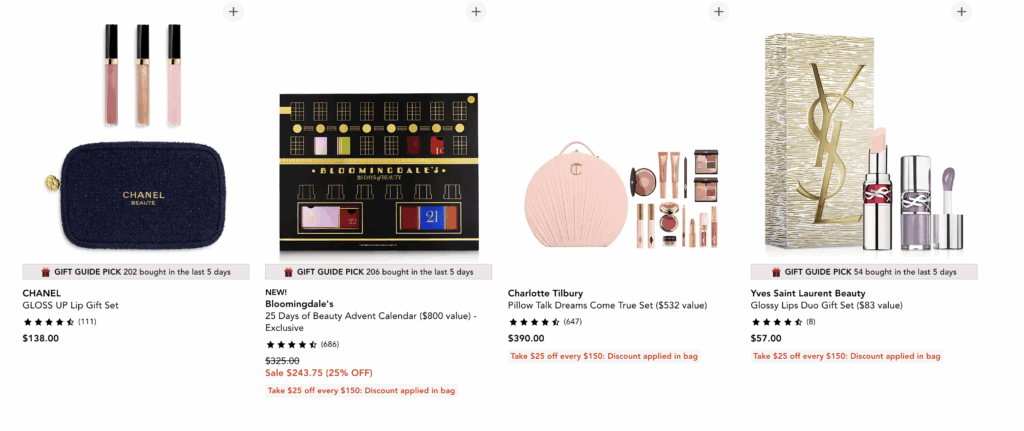
Retailers can also use Attribute Messaging combined with social proof such as “Gift Guide Pick 206 bough in the last day” to reassure shoppers that they are making smart shopping decisions during peak gifting periods.
Smarter returns strategies start with smarter purchase decisions
Returns in eCommerce are inevitable, but there are ways to tackle high return rates upfront by optimising the overall digital experience and helping shoppers make more informed purchase decisions.
Reducing returns begins long before an item hits the warehouse.
Conversion messaging, including social proof and attribute messaging help:
- Improve shopper confidence
- Reduce fit and expectation-related returns
- Guide buyers toward products with lower return risk
- Accelerate online growth without relying on “free returns” as a differentiator
In an environment where shoppers want greater flexibility, the most sustainable path forward is to help consumers make informed, confident decisions at the point of purchase.
Contact Taggstar today to learn how social proof and attribute messaging can be implemented today to help you minimise returns.