Fear of Missing Out (FOMO) is a powerful psychological behavior that drives people to act quickly to avoid regret. In marketing, this instinct translates into a strong motivator for consumers to make purchases before opportunities disappear. FOMO marketing taps into this sense of urgency and social comparison. It typically encourages action through limited-time offers, exclusive deals, or trending products.
Understanding how and why FOMO influences buying decisions helps brands and retailers create marketing campaigns that feel compelling rather than pushy. In the following, we will explore what FOMO marketing is, how it works, and when it produces the best results.
What Is FOMO Marketing?
FOMO marketing is a strategy that uses urgency, scarcity, and social proof to push people to act quickly before an opportunity disappears. It taps into consumers’ anxiety about missing a valuable deal, experience, or product that others are already enjoying.
FOMO marketing creates urgency by emphasizing time limits, such as “sale ends tonight” or “24-hour discount,” so it feels like there is a time limit on the opportunity. It uses scarcity by highlighting limited availability, like “only 5 items left” or “last seats remaining,” making the offer seem more exclusive. Tapping into crowd mentality behavior, social signals come from showing what others are doing, for example, “78 people bought this in the last 24 hours” or “most popular choice,” which suggests that buying the item is the smart choice. Together, urgency, scarcity, and social proof make the offer feel important, short-lived, and socially validated, nudging people to buy now rather than later.
How FOMO Works in Marketing
The fear of missing out (FOMO) is the feeling or idea that you are missing out on something important or enjoyable that others are experiencing. It works by poking at a few core psychological tendencies: loss aversion, the need to belong, and regret avoidance.
Loss aversion means that people feel potential losses more strongly than equivalent gains, so “missing out” on a deal, an event, or an opportunity can feel worse than never having it at all. The need for social belonging makes us highly sensitive to signs that others are enjoying rewarding experiences without us, which can trigger anxiety and a rush to “catch up.” Regret avoidance adds another push where people imagine how bad they will feel later if they say no now, so they choose the option that seems safest from future regret.
Together, these triggers move users from hesitation to action by making inaction feel risky – not clicking, not buying, or not joining suddenly looks like a loss, social exclusion, and future regret all at once.
Common FOMO Marketing Tactics
Limited-Time Offers & Flash Sales
Limited-time offers and flash sales use clear time limits to turn interest into action. When people know that a deal will end at midnight or a discount code will expire in 24 hours, they are more likely to act. Simple, transparent messaging works best such as “20% off until Sunday” or “Flash sale: 2pm–6pm only.” The deadline should be easy to see and understand, and the deadline should be honored. Extending “ending soon” offers again and again can quickly undermine trust, so it is important to use time-bound urgency sparingly and honestly, not as a constant background pressure.
Scarcity & Low-Stock Messaging
Scarcity and low-stock messaging highlight that a product or offer may not be available for long. Phrases like “only 3 left,” “selling fast,” or “limited inventory” can nudge undecided shoppers to hit “buy” faster. In scarcity and low-stock messaging, authenticity and credibility matters and the data used should be based on actual inventory and demand.
Social Proof as a FOMO Trigger
Social proof taps into the mindset that if others are choosing something, it is likely a safe or smart choice. Seeing “38 people are viewing this,” “trending now,” or recent reviews can create a gentle sense of FOMO and increase confidence. These signals reassure consumers that they are not acting alone or taking an unusual risk by deciding to make a purchase. The goal is to give confidence, not to guilt or shame anyone into buying.
Exclusivity & Early Access
Exclusivity and early access make offers feel special by limiting who can join and when. VIP launches, waitlists, and limited editions give people a sense of status and belonging. When customers feel they are a part of the “inner circle,” they are more likely to act quickly.
Countdown Timers & Visual Urgency
Countdown timers and other visual cues make urgency feel tangible. A ticking clock or a progress bar on remaining inventory helps shoppers understand availability at a glance. Used thoughtfully, these visuals support decision-making. When they are over-used, or obviously fake, they can feel manipulative and damage trust over time.
FOMO Marketing Examples in Practice
FOMO marketing is used in many everyday contexts. In eCommerce, product pages often display badges that showcase messages like “Only 3 left” or “Selling fast,” which works because it makes the risk of missing out feel immediate and nudges browsers to purchase. Hot Topic saw a 6.3% uplift in conversions leveraging social proof messages that showcase demand.
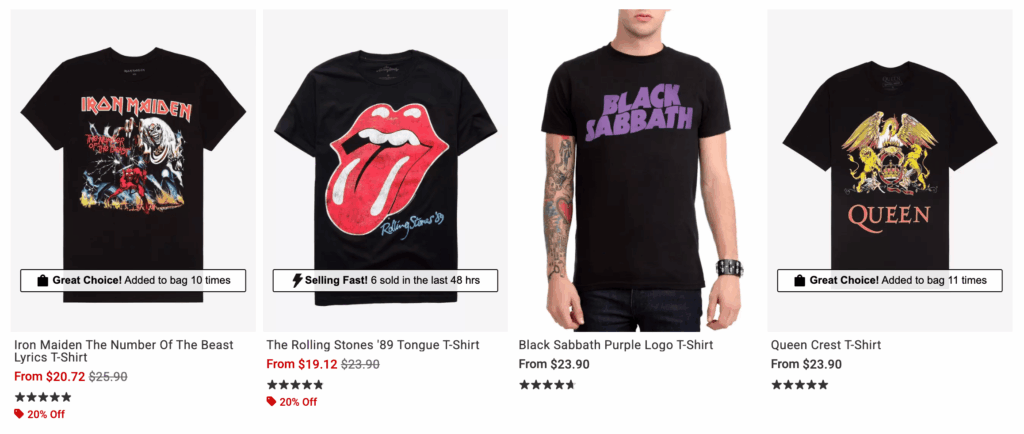
In travel, airlines and booking sites display messages like “Only 2 seats left at this price” or “5 people are viewing this hotel,” which highlights both scarcity, interest and purchase intent, nudging hesitant consumers to lock in their trip. New product launches use waitlists, pre-order windows, or “early bird” pricing to reward quick decisions and make early access feel exclusive.
These examples work because they reframe waiting as a potential loss of a deal, a venue, or a special experience.
Benefits of FOMO Marketing
There are many benefits of leveraging FOMO marketing including:
- Higher conversion rates: FOMO effectively nudges shoppers who are uncertain to make a decision, turning views and clicks into actual purchases.
- Increased engagement: Time-bound offers, limited drops, and social proof messages encourage users to browse more, check back frequently and interact with content or products more actively.
- Faster decision-making: When it is clear that an offer might not last, people spend less time comparing options and are more willing to decide in the moment.
- Stronger perceived value: Limited availability, exclusivity, and high visible demand can make an offer feel more special and desirable, so customers see greater value in the same product or experience and feel more confident in the purchase decision.
Brands like Steve Madden and Fabletics leverage social proof to showcase product popularity and demand. Messages like “55 sold in the last 24 hours” help shoppers make more confident purchase decisions which increases conversion rates.

Ethical Use of FOMO Marketing
Ethical FOMO marketing builds trust instead of exploiting anxiety. Artificial urgency such as fake countdown timers or endlessly extended “last chance” deals can create quick spikes in sales but risks backlash when people realize the pressure was not true. Misleading scarcity, such as claiming low stock, is especially harmful because it turns FOMO into a scare tactic rather than a helpful signal.
Genuine FOMO uses real data and transparent, honest messaging about time limits, availability, and popularity to gently nudge shoppers. Over the long term, transparent FOMO tactics strengthen brand credibility and that long-term trust is much more valuable than quick sales gains.
FOMO Marketing vs Manipulative Pressure
FOMO marketing and manipulative pressure can look similar, but they feel very different to the customer. Helpful FOMO shares real information about time limits, low stock, or high demand so shoppers can make quicker and more informed and confident purchase decisions. Manipulative pressure, by contrast, aims to create a false state of panic – fake countdowns, scarcity, or copy that implies you are irresponsible if you do not buy. This kind of push often leads to mistrust.
H2: Turning FOMO Marketing into Measurable Results
FOMO marketing works best when urgency, scarcity, and social proof are based on genuine, real-time information. Signals like limited-time offers, low-stock alerts, and “popular now” messages are most powerful when they work together to clarify what might be missed, not to create panic. Responsible execution builds trust – shoppers learn that when you say something is limited or expiring, they can rely on it, which increases confidence and loyalty over time.
Taggstar helps retailers activate FOMO signals through authentic social proof messaging and dynamic badging based on real-time data that allows retailers and brands to highlight true demand and availability without misleading shoppers.

